Tech Tip #3—Refrigerator Openings
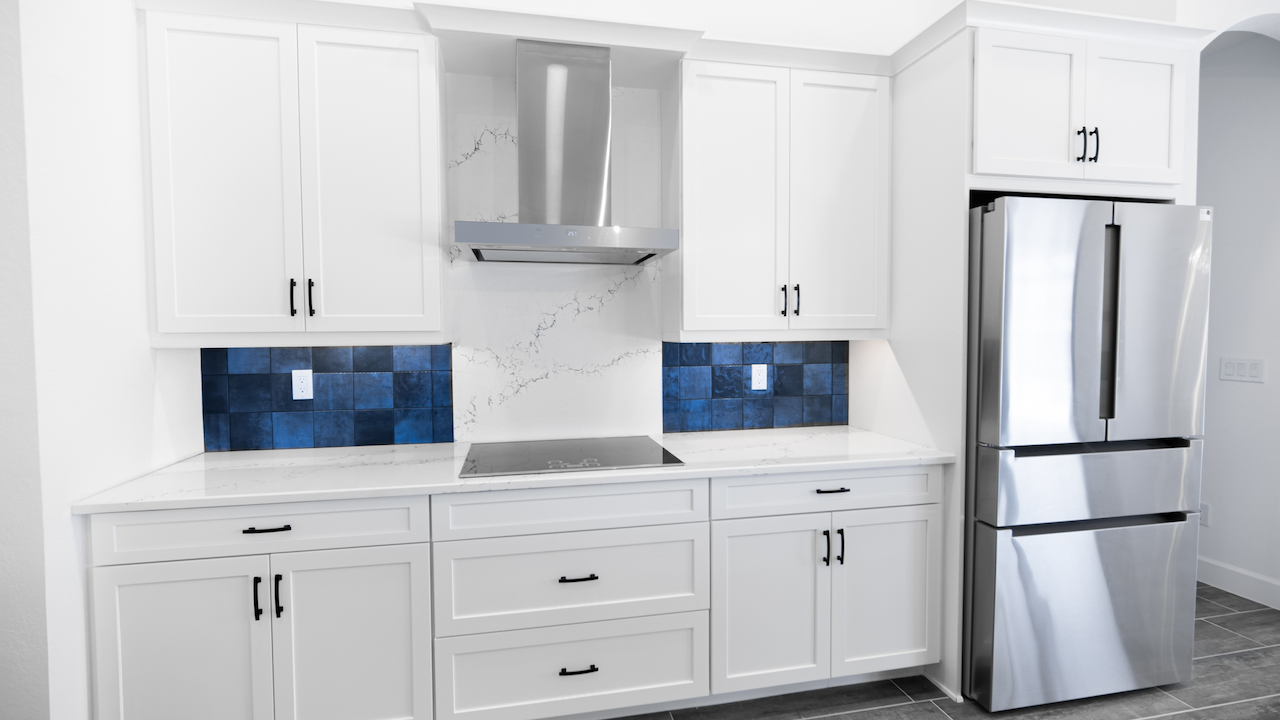
Refrigerators come in many sizes, but before you install your next kitchen, you might want to take note of a few things and be aware of the common pitfalls that plague most installers.
In most cabinet designs, the fridge is installed between tall panels, fillers, and cabinets for a more built-in look as shown in the example below.
Stock refrigerator cabinets are typically 36 inches wide, which determines the width available for the refrigerator opening below the cabinet. Most specifications will show that a 36 inch fridge is typically 35 3/4 inch wide, so in a perfect world, it should fit in a 36 inch opening with 1/4 inch to spare. If we look below, the refrigerator does show this to be the case.
Unfortunately, the center of the fridge can bow out up to an inch during shipping due to the insulation inside the unit shifting or expanding.

One simple fix is to add a half-inch filler to each side of the 36 inch upper cabinet, increasing the total width of the fridge opening by 1 inch. This only works if you have enough space available in the room for the extra inch, but if the initial design allows only a 1 inch margin of error, you may need to have a conversation with the designer anyway. Below we have a drawing that shows how to add half inch fillers on both sides of the face frame to get the 37” width between the tall panels. The cabinet would also have spacers installed behind it to bring it 3 inches forward in this example. 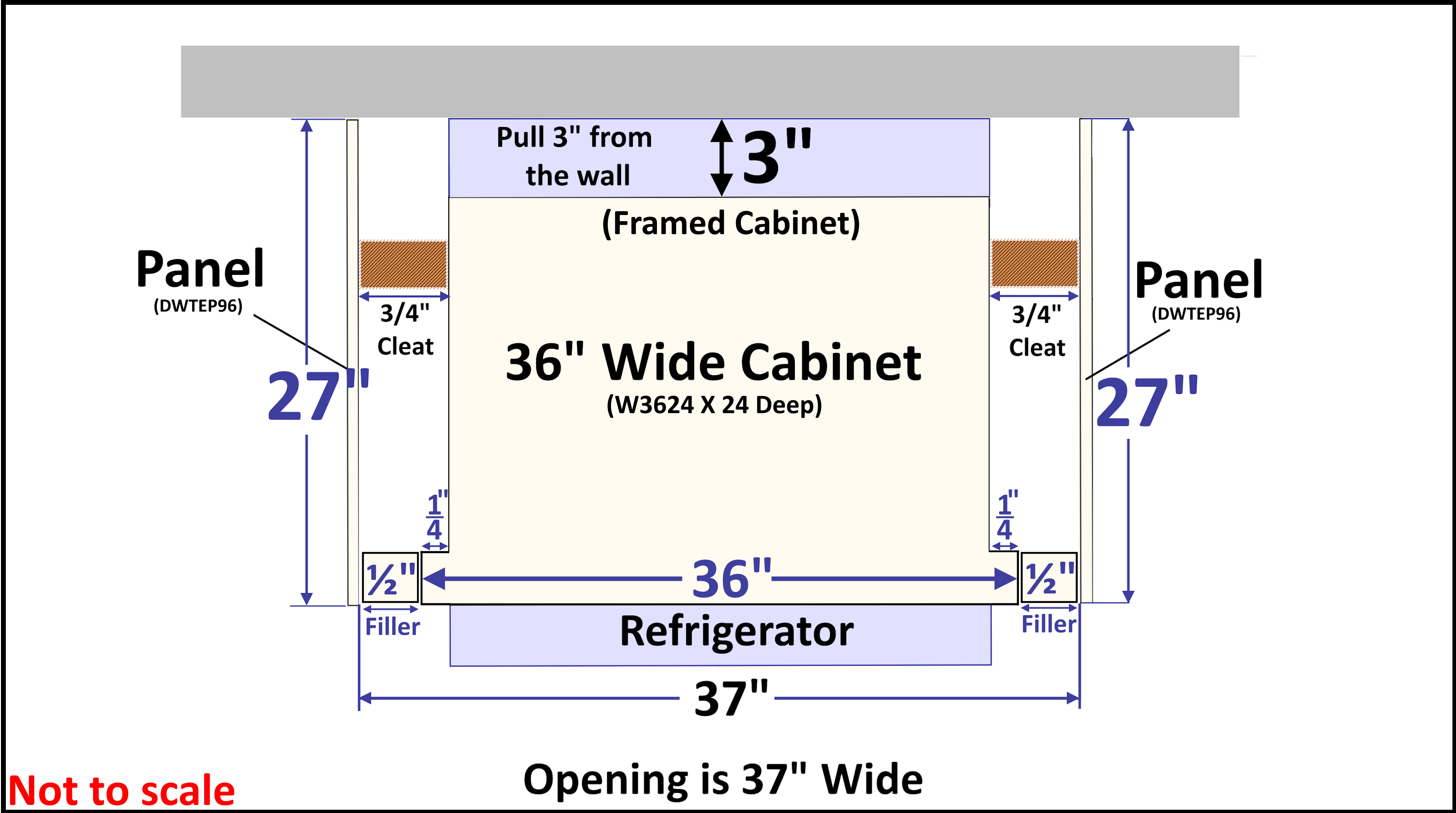
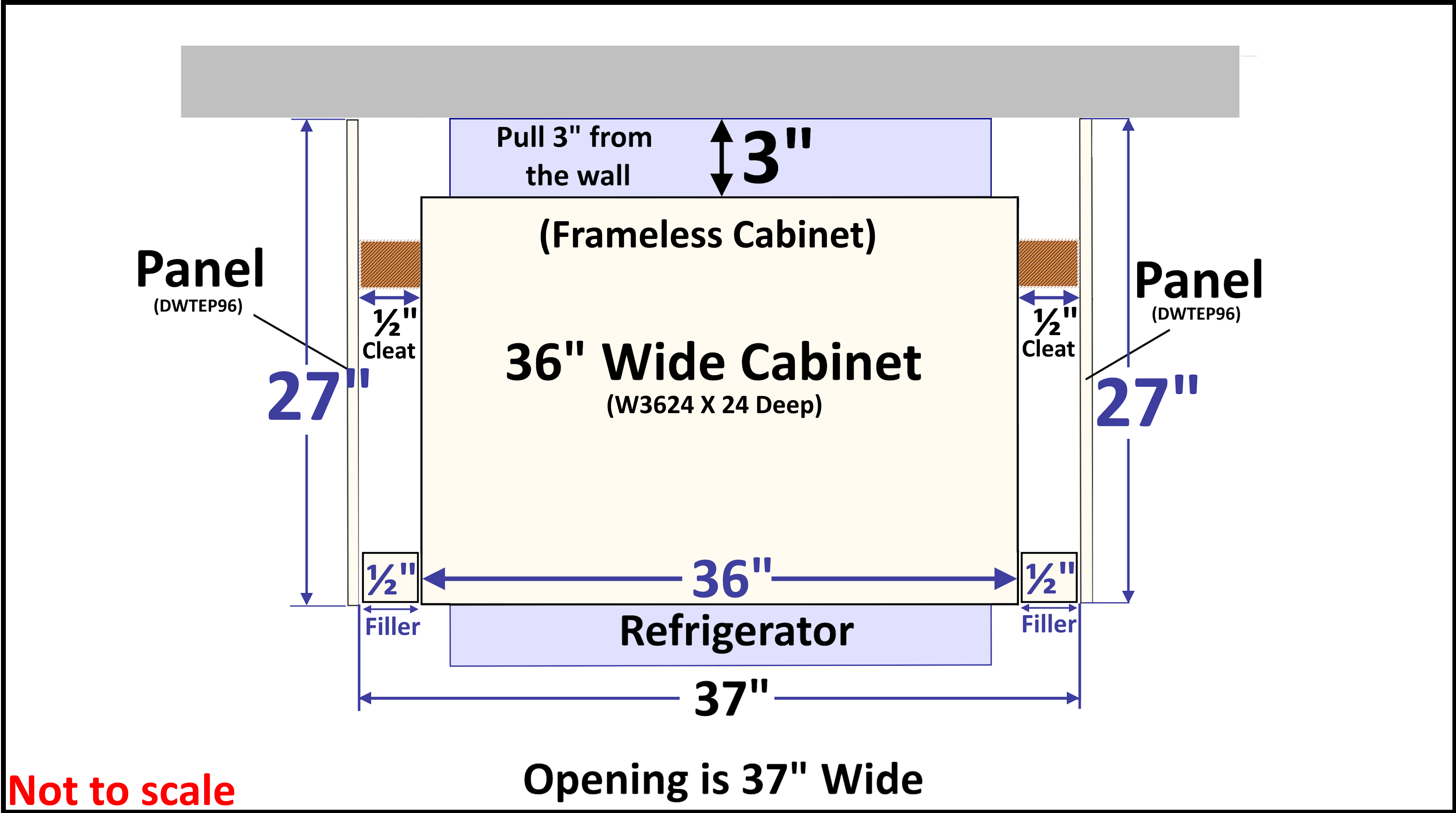
Note that for frameless cabinets, the cleats would be 1/2 inch wide (instead of 3/4 inch) since there is no need to account for the 1/4 inch overhang on the face frame.
Thanks for reading!
—The Cabinet Academy Team